
A Quick Guide To Foreign Participation In Malaysian Distributive Trade Sectors
To protect the interests of local businesses and communities, the Malaysian Ministry of Domestic Trade requires foreign businesses to apply for a Wholesale, Retail, & Trade (WRT) license to participate in local distributive trade sectors.

Sample WRT license.
Unsurprisingly, WRT licenses are meant to be a barrier to entry any smaller foreign businesses as these are more likely to directly compete with local SMEs, allowing only those:
- able to operate at large scales beyond local SMEs
- with exclusive products not available locally
- able to contribute to local job creation
Below we provide an overview for readers to understand what is required to set up a foreign-owned trading operation in Malaysia.
For those who prefer official sources, our guide is a condensed version of KPDN’s guidelines.
Let’s begin.
Scope
| Category | Description |
|---|---|
| Distributive Trade | All linkage activities that channel goods and services from supply chains to intermediaries for resale or to final buyers. |
| Wholesale Trade | Sale or resale of new and/or used goods and services to distributors who purchase them for the purpose of conducting business. |
| Retail Trade | Sale or resale of new and/or used goods and services to the general public for final consumption, including fast consumable goods sold to organisations where the distinction between business and final consumption may not be clear. |
Exemption
The following distributive trade activities are exempt from a WRT license:
- Foreign manufacturers that only distributes the products it makes itself are treated as manufacturers
- The business has been granted regional establishment status by MIDA
Baseline requirements
Regardless of industry, every WRT license applicant must be incorporated as a Sdn Bhd under the Companies Act 2016, and have a minimum paid-up capital requirement of RM1 million per outlet.
Beyond this baseline, different types of businesses must meet different additional requirements.
Restaurants / F&B outlets
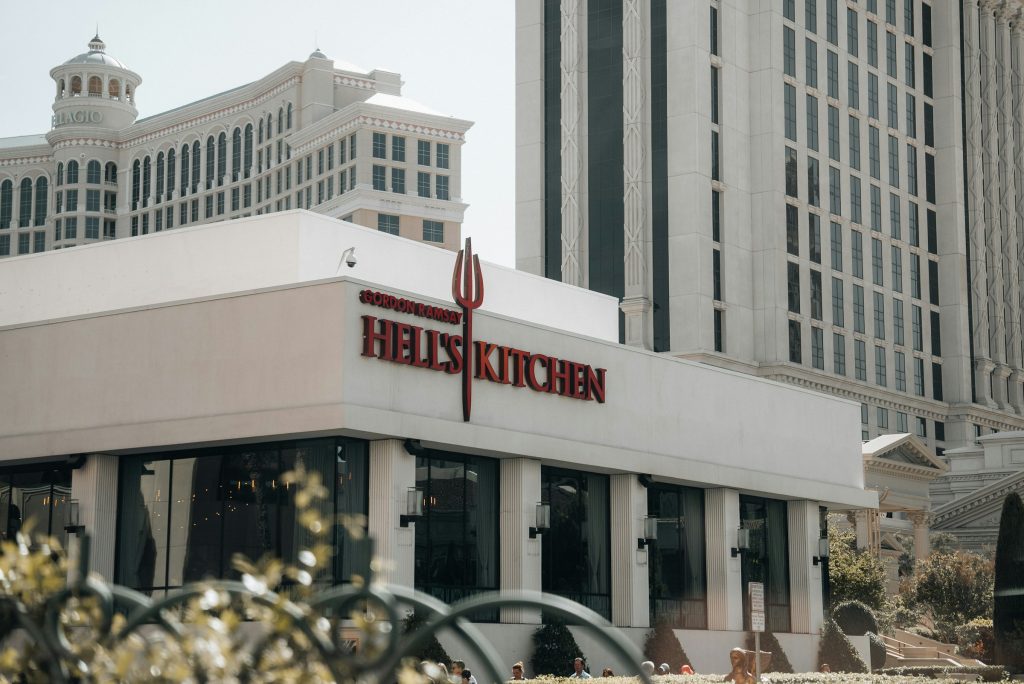
In addition to baseline requirements, foreign-owned F&B businesses must demonstrate that their venture will not be in direct competition with small local food operators, ideally by introducing novel culinary items and experienced that don’t currently exist in the Malaysian market.
This is done through the additional supporting documents requested which consist of:
-
a full menu
-
photos of the premises and / or products
-
documents certifying the chef’s or key employee’s qualifications and experience
In an ideal situation, the proposed F&B establishment will serve food from the applicant’s home country with decorations to match.
Specialty stores
Specialty stores are outlets that focus on selling a single primary product, which in addition to restaurants can include:
-
household / personal goods
-
furniture
-
household appliances
-
electrical appliances
-
healthcare products
-
optical goods
-
footwear
-
clothing and apparel
-
sport goods
-
books
-
jewelry
-
electronic goods
-
motorcycles/motor vehicles
-
small machinery
-
pharmacies
In addition to baseline requirements, the foreign business must similarly demonstrate they will not be direct competitors with local equivalents, fill a market gap, offer unique / exclusive products, and transfer of technology or skills to Malaysians.
Convenience stores
Convenience stores are small-format retail outlets with a sales floor area typically below 180 square meters, and in addition to baseline requirements are subject to additional structural and equity restrictions:
-
must operate under a franchise model in accordance with the Franchise Act 1998
-
foreign equity is limited to 30%, with at least 30% reserved for Bumiputera or Malays
-
only Malaysian citizens may act as franchisees
-
the master franchisor may only operate up to 30% of total outlets as direct outlets
These measures ensure that convenience stores promote local participation (considering they are often close to residential areas) while maintaining regulatory oversight.
Hypermarkets
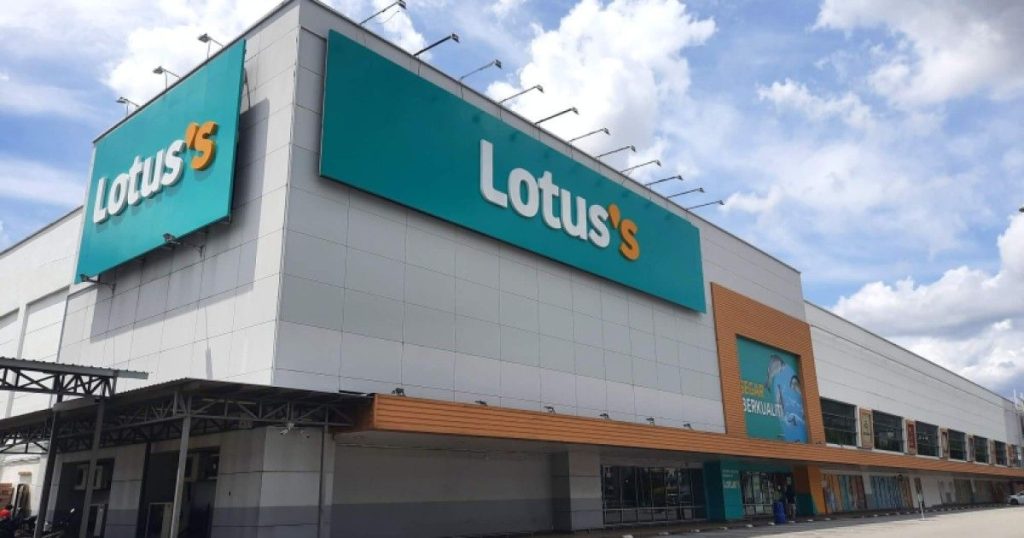
A hypermarket is defined as a self-service distribution store with a sales floor area of at least 5,000 square meters, and due to their immense socio-economic impact, are subject to extensive regulatory and operational controls:
- at least RM50 million paid-up capital
-
30% Bumiputera equity, or alternatively:
-
Contribution of 0.1% of annual revenue to a trust fund for 10 years
-
Limitation of non-Malaysians to 10% of management positions
-
-
at least 30% of SKUs must be from Bumiputera or Malay SMEs
-
at least 50 parking bays per 1,000 sqm of floor area
-
feasibility and impact study involving at least 200 local retailers and residents
-
operating 10am–10pm on weekdays and 10am–12 midnight on weekends and public holidays
- located within jurisdictions with at least 250,000 residents
-
cannot operate within 1.6 km of residential areas
Superstores
These are defined as retail outlets with a sales floor area between 3,000 – 4,999 square meters, though they may operate with a minimum of 1,000 square meters within certain jurisdiction. As a smaller version of a hypermarket, superstores share many operational requirements on a smaller scale:
- at least RM25 million paid-up capital
-
at least 30% of SKUs must be from Bumiputera or Malay SMEs
-
at least 50 parking bays per 1,000 sqm of floor area
-
feasibility and impact study involving at least 200 local retailers and residents
-
operating 10am–10pm on weekdays and 10am–12 midnight on weekends and public holidays
-
located within jurisdictions with at least 200,000 residents
Departmental stores
Departmental stores are retail outlets without a fixed sales floor area but are below the range of superstores, and additional requirements include:
-
at least RM20 million paid-up capital
-
at least 30% of SKUs must be from Bumiputera or Malay SMEs
-
minimum 50 parking bays per 1,000 sqm of floor area
-
feasibility and impact study involving at least 200 local retailers and residents
-
operating hours of 10am–10pm on weekdays and 10am–12 midnight on weekends and public holidays
-
located within jurisdictions with at least 150,000 residents
-
Cannot operate within 3.5 km of residential areas
Restricted sectors
- supermarkets or mini markets
- provision shops, general vendors, or news agent
- medical halls (traditional medicine/dry foodstuff
- petrol stations
- permanent wet markets or pavement stores
- non-exclusive textile, F&B, or jewelry shops
Note: This doesn’t mean foreign participation is prohibited, but it generally requires a joint venture with a Malaysian partner who holds a majority of the company.
License fees
Although KPDN currently imposes no application or processing fee for a WRT license, as it is only needed by foreign-owned businesses, applications are almost always done through a third-party service provider, so the ‘fee’ is effectively the service provider charge.
This varies between providers, and our guide to WRT license fees explains how to find the best value for your money among the many third-party options available.
That said, businesses are allowed to handle their own application, and our next section addresses this.
WRT license application steps
Assuming you have incorporated your business entity in Malaysia, the next step is to prepare all required documents.
Required documents
You can download an official checklist of the required documents on KPDN’s website, but for your convenience here’s what you’ll need to prepare.
Mandatory documents:
- Completed WRT 1 form.
- Company profile / Business Plan
- Certified copies of the Registration of Company and Form 49
- Stamped copies of Form 32A, if there have been changes in shareholding
- Inland Revenue Board:
- Copy of IRB’s tax registration confirmation letter for newly operating companies
- Copy of IRB’s confirmation of submission e-C for companies already in operation
- Employee Provident Fund:
- Proof of registration for new companies.
- Latest 3 months EPF statement for existing companies.
Additional documents:
- Copy of valid license by the Local Authorities
- Copy of tenancy / sale & purchase agreement for the premises
- Singed copies of the latest 3 years audited financial statements
- (If applicable) Copies of licenses from relevant authorities
- Copies of documents for 3 transactions per month over the last 3 months
- Information on foreign workers / expatriates
- Colour photographs of the premises / warehouse / office
- Product catalog / sample
Once all documents are compiled, you can submit the application.
Application submission
Once you have all the necessary documents, the application process is straightforward enough.

- go to BLESS, Malaysia’s online business license application portal
- sign up for an account
- select the license you’d like to apply for
- fill up and submit your license application
- pay the required fee
The application takes two to three months to process, and upon approval, KPDN grants a license valid for one to three years after accessing the applicant’s:
- financial performance
- tax payment to government, and
- technology transfer / sharing
That’s it from us, and we wish you a smooth application 🙂
Let MISHU handle your WRT license application
If you are a foreigner looking to set up a restaurant in Malaysia, consider our professional WRT license application services for a one-stop solution for company incorporation, visa applications, and full licensing support.