A Guide To WRT License Applications & Renewals In Malaysia
Wholesale, Retail, and Trade (WRT) licenses are issued by the Malaysian Ministry of Domestic Trade and required for all foreign-owned businesses in Malaysia operating within distributive trade businesses.

This guide covers key aspects of WRT licenses for foreign businesses, including:
- objectives of WRT licenses
- types of businesses requiring WRT Licenses
- general and specific requirements
- required documents
- the application process, including time and cost estimates
- a warning that you might not need a WRT license
Let’s begin.
WRT license objectives
Understanding the purpose behind WRT licenses can provide a more intuitive understanding of how to navigate the application.
Those who want a deeper dive can see our quick look at how WRT licenses support KPDN objectives – but for practical purposes this section will suffice.
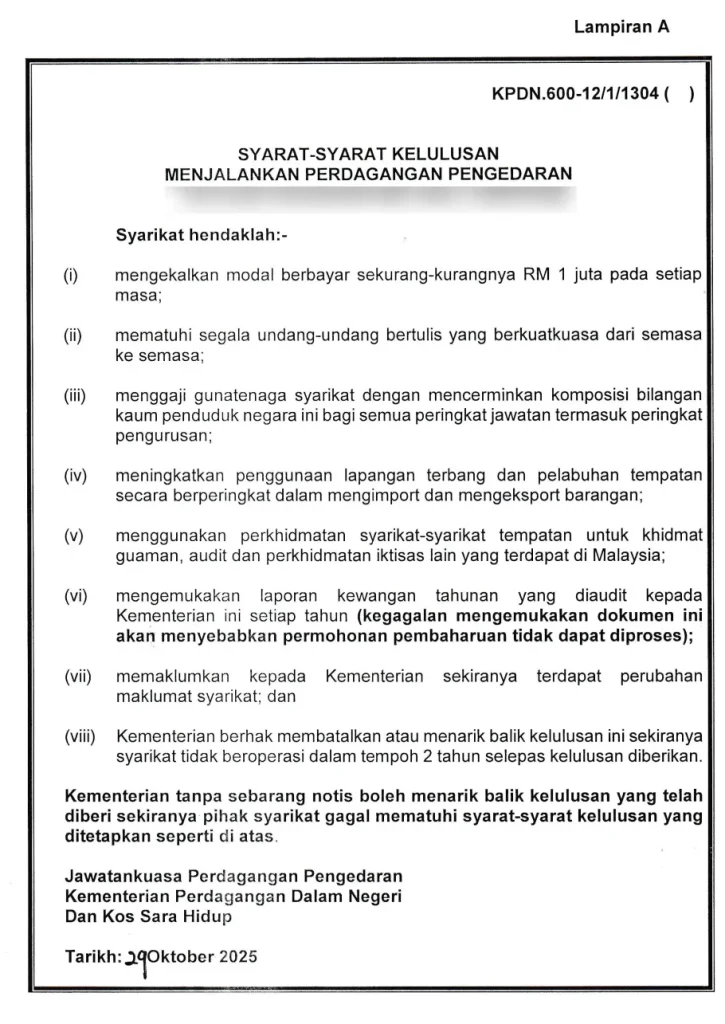
Once understood, WRT license requirements become easier to digest.
KPDN is the Malaysian Ministry of Domestic Trade responsible for protecting the interests of Malaysian consumers, markets, and local businesses, and WRT licenses are meant to align foreign business participation in Malaysian trade with three goals.
- Elevating Malaysian industry: Create an environment that encourages healthy competition among industry players while preventing monopolistic market practices.
- Encourage modernisation: Encourage the use of technology for streamlined workflows, logistics and resource usage.
- Balance foreign and local participation: Like it or not, KPDN protects local businesses and entrepreneurs from being outcompeted.
Applicants therefore stand a better chance of obtaining a WRT license if the foreign-owned business can add value to Malaysian industry without threatening local enterprises.
Businesses that need a WRT license
KPDN defines distributive trade as:
‘…trade which comprises all linkage activities that channel goods and services from the supply chains to intermediaries for the purpose of resale or to the final buyers’.
Essentially, any foreign-owned business involved in selling products or services to end consumers likely falls under distributive trade, and some of the most common sectors that we have assisted with include:
- F&B outlets
- Consultancies
- Retail stores of various sizes, and
- Foreign franchises
Those interested can check out this official document which goes into full detail.
General requirements

No matter the industry, business applying for a WRT license must:
- be incorporated in compliance with the Company Act 2016
- have a minimum paid-up capital of RM1 million (~ quarter million USD), and
- have already received other operating licenses, namely PBT premise and signboard approval
Restaurants and F&B outlets

In addition to general requirements, foreign F&B ventures must provide the following information:
- a full menu
- photos of the premises / products
- documents certifying the chef’s or employee’s qualification and experience
Ideally, these supporting documents show your business features unique cuisine not from Malaysia so it will not be in direct competition with local food operations. We go into full detail for F&B ventures in our guide to setting up a foreign-owned restaurant in Malaysia.
Specialty stores
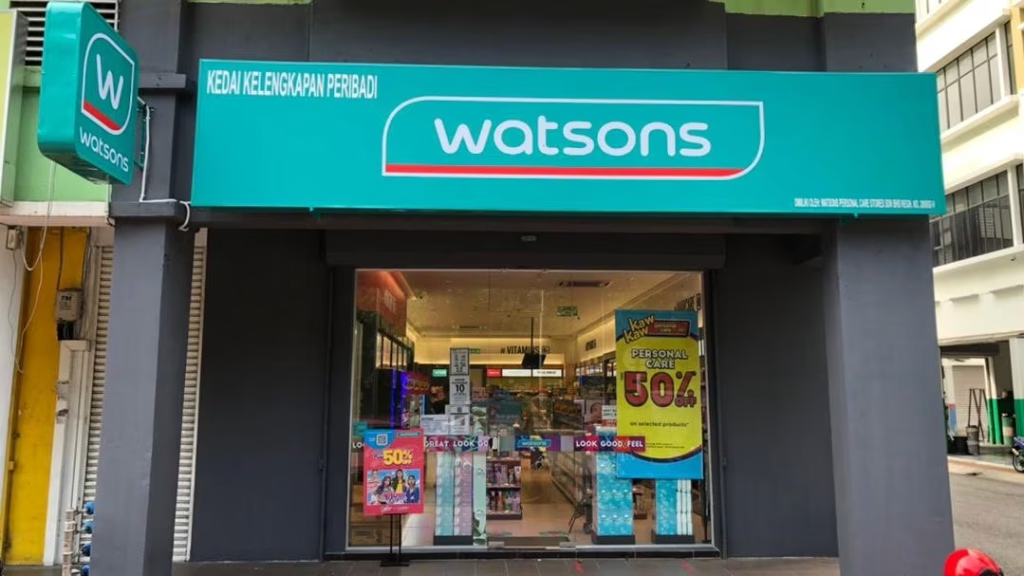
Specialty stores are retail outlets with a single focus such as household / personal goods, furniture, household appliances and a variety of other products we list in full in our deep dive into WRT license requirements.
Like restaurants, the foreign venture must demonstrate they will:
- not be direct competitors with local equivalents
- fill a market gap, offer unique / exclusive products, and
- transfer of technology or skills to Malaysians
Hypermarkets, superstores, and department stores

Hypermarkets, superstores, and departmental stores are large retail and wholesale centres separated defined according to floor size
- Hypermarket: 5,000+ sqm
- Superstore: 3,000–4,999 sqm, or 1,000+ sqm in certain jurisdictions
- Departmental store: Below floor size of superstores
Due to their size and impact on local communities, they are subject to heavy additional KPDN requirements including:
- minimum paid-up capital of RM20 million – RM50 million
- at least 30% Bumiputera or Malay SME SKUs
- 50 parking bays per 1,000 sqm of floor area
- a feasibility and impact study involving at least 200 local retailers and residents
- comply with prescribed operating hours
Part of the feasibility and impact study requires meeting minimum population thresholds for their location and being located a certain distance from residential areas.
Required documents
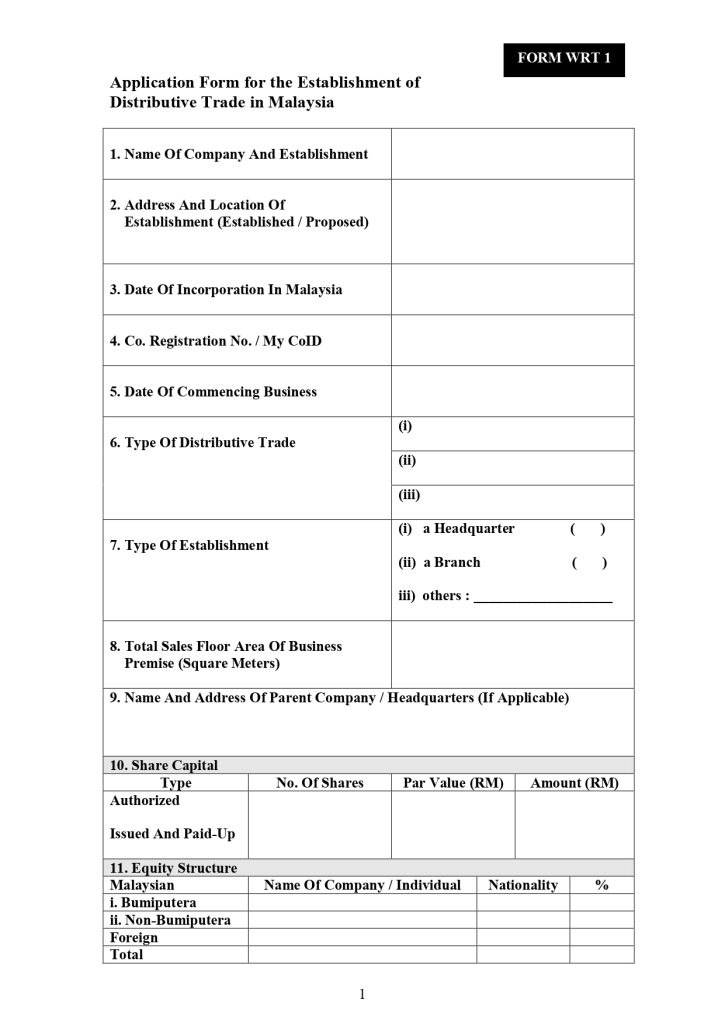
WRT 1 Form sample.
You can download an official checklist of the required documents on KPDN’s website, but for your convenience here’s what you’ll need to prepare.
Mandatory documents:
- completed WRT 1 form.
- company profile / business plan
- certified copies of the Registration of Company and Form 49
- stamped copies of Form 32A, if there have been changes in shareholding
- Inland Revenue Board:
- copy of IRB’s tax registration confirmation letter for newly operating companies
- copy of IRB’s confirmation of submission e-C for companies already in operation
- Employee Provident Fund:
- proof of registration for new companies
- latest 3 months EPF statement for existing companies
Additional documents:
- copy of valid premise and signboard license from Local Authorities
- copy of tenancy / sale & purchase agreement for the premises
- singed copies of the latest 3 years audited financial statements
- (If applicable) copies of licenses from relevant authorities
- copies of documents for 3 transactions per month over the last 3 months
- information on foreign workers / expatriates
- colour photographs of the premises / warehouse / office
- product catalog / sample
If you would like help with any item on the list, get in touch and we’d be happy to help!
Application process
Once you have all the necessary documents, the application process is straightforward enough if you would like to handle it yourself.
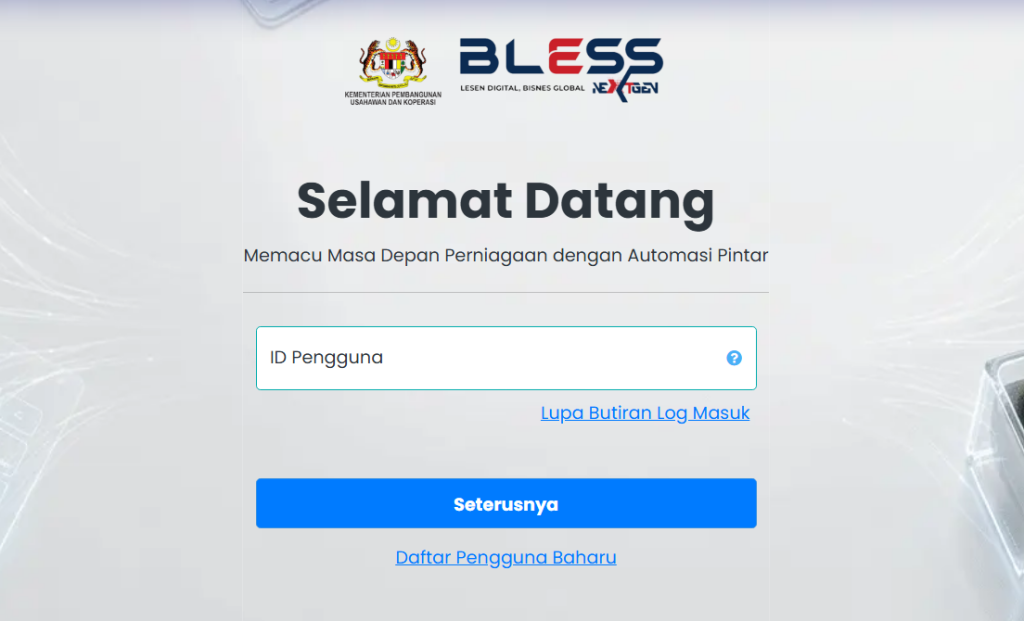
- Go to BLESS, Malaysia’s online business license application portal
- Sign up for an account
- Select the license you’d like to apply for
- Fill up and submit your license application
- Wait for KPDN to review your application
The application takes two to three months to process, and upon approval, KPDN grants a license valid for one to three years after accessing the applicant’s:
- financial performance
- tax payment to government, and
- technology transfer / sharing
As KPDN doesn’t have an application fee for WRT licenses, in theory businesses are free to apply themselves, but as this is almost exclusively applied for by foreign businesses, third-party service providers are common.
Renewals
WRT license holders often deal on credit terms, which eventually means dealing with debtors, and understanding how to initiate garnishee orders against bank accounts in Malaysia is something you’ll likely find in handy.
WRT license renewals are submitted through BLESS and should be done at least three months before the current one expires.
Supporting documents generally consist of the latest versions of submissions during the initial application with some variations – for a full list see our guide to WRT license renewals.
As long as the company continues to meet KPDN’s requirements, the process is fairly straightforward, and renewed licenses are also valid for one to three years, with longer periods becoming more likely after successive successful renewals.
USS licenses
Just a heads up that you may need an Unregulated Services Sector (USS) license instead.
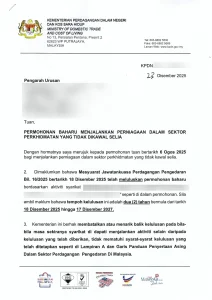
Sample USS license, also from KPDN.
Both USS and WRT licenses are issued by KPDN to foreign-owned companies operating in Malaysia but:
- WRT licenses are for trading businesses, while
- USS licenses are for service-based companies
If a business does both trading and service-based activities, it still only needs one license which will be based on where most of its revenue comes from. Application processes and approval time are the same for both, but if you apply for the wrong one, it will likely get rejected and you’ll have to go through the whole application process again.
As the USS is much less-known, we wanted to bring this to your attention – if your foreign venture deals in services, our guide to USS licenses will be more relevant.
That’s it from us, and we wish you all the best with your application😊
Let MISHU handle your WRT license application

If you are a foreign business planning to set up retail or wholesale operations in Malaysia, consider our professional WRT license application services for full support with regulatory approvals, licensing, and compliance requirements to help you begin operations smoothly and efficiently.
🌐 Specific queries on WRT licenses
This section is where we answer more niche questions about WRT (and by extension USS) licenses.
- Q: What is the minimum paid-up capital for a WRT license?
A: Most foreign-owned businesses need a minimum paid-up capital of RM1 million, which is roughly a quarter of a million US dollars. Hypermarkets, superstores and department stores need RM20 million to RM50 million. - Q: Does a foreign company need RM1 million paid-up capital for a WRT license?
A: Yes. RM1 million is one of three general requirements every applicant must meet regardless of industry:- be incorporated in compliance with the Companies Act 2016
- have a minimum paid-up capital of RM1 million
- already hold PBT premise and signboard approval
Businesses that can’t meet all three when applying are unlikely to get through KPDN’s review.
- Q: Can WRT paid-up capital be paid otherwise than in cash?
A: WRT paid-up capital isn’t a payment to KPDN. Your company only needs to show it has enough funds, usually through a bank account statement, and the money stays in the company to be used for operating costs. - Q: What are the capital requirements for the unregulated services sector?
A: USS applicants usually need a minimum paid-up capital of RM1 million, but the requirement applies per outlet. A business with two outlets would need RM2 million. - Q: Can a company that is 50% held by a foreigner get a WRT license?
A: It doesn’t need one. A company that is 50% held by a foreigner doesn’t need a WRT or USS license at all, as long as the other half is owned by a Malaysian company or individual. - Q: Can a foreign-owned restaurant reduce the RM1 million paid-up capital with a 50% local partner?
A: With a Malaysian company or individual owning 50%, the restaurant no longer needs a WRT license, so the RM1 million WRT capital requirement no longer applies. - Q: What is the minimum capital for a foreign-owned online marketplace under the WRT rules?
A: An online marketplace would most likely be classed as a specialty store, so it needs a minimum paid-up capital of RM1 million. - Q: Do foreign-owned hypermarkets need 30% Bumiputera equity and RM50 million in capital?
A: Not exactly. The 30% figure applies to products rather than shareholding, and the capital requirement is a range. Hypermarkets, superstores and department stores must meet these additional KPDN requirements:- minimum paid-up capital of RM20 million to RM50 million
- at least 30% of SKUs from Bumiputera or Malay SMEs
- 50 parking bays per 1,000 sqm of floor area
- a feasibility and impact study involving at least 200 local retailers and residents
- compliance with prescribed operating hours
The feasibility and impact study also requires meeting minimum population thresholds and keeping a set distance from residential areas.
- Q: Do foreign-owned companies in Malaysia need a WRT license?
A: Yes, if they operate in distributive trade, which KPDN defines as ‘trade which comprises all linkage activities that channel goods and services from the supply chains to intermediaries for the purpose of resale or to the final buyers’. Foreign-owned companies that mainly provide services need a USS license instead. - Q: What types of companies need a WRT license?
A: The sectors that most commonly need a WRT license include:- F&B outlets
- retail stores of various sizes, including specialty stores
- foreign franchises
- hypermarkets, superstores and department stores
In each case, the license is only needed if the company is at least 51% foreign-owned.
- Q: Does a seller of record, OEM or distributor count as distributive trade for a foreign-owned company?
A: Yes. Sellers of record, OEMs and distributors are all considered part of distributive trade. - Q: What license does a trading company with only an office need?
A: A foreign-owned trading company needs a WRT license. Having only an office doesn’t remove the premises requirements, so you’ll still need a PBT premise and signboard license, a tenancy or sale and purchase agreement, and colour photos of the office. - Q: Does a foreign company appointing a local distributor need a WRT license?
A: Yes. Appointing a local distributor usually means selling to them at wholesale prices, which falls under distributive trade. - Q: Is a 100% foreign-owned company exempt from WRT if its principal business does not appear on import and export documents?
A: No. Leaving your principal business off import and export documents doesn’t create an exemption, and doing so is against the law. - Q: Do I need a WRT license if my company is registered with a local partner?
A: Not if your local partner, whether a Malaysian company or individual, owns at least half of the company. - Q: Do foreign professional consultancy services need a WRT license?
A: No. Foreign-owned consultancy services need a USS license instead. - Q: Does a third-party exporter of record service need a WRT license?
A: Yes. It doesn’t matter whether you’re buying or selling. As long as your business is part of the distributive trade sector and at least 51% foreign-owned, you need a WRT license. - Q: Is there a sample of a WRT exemption?
A: No. There’s no formal WRT exemption document or certificate. You either fall under the threshold where you need a WRT license or you don’t. - Q: Does an IT company need a WRT license?
A: It depends on where most of your revenue comes from:- selling hardware needs a WRT license
- expertise and consultation needs a USS license
If you do both, you’ll need the license that matches your higher source of revenue.
- Q: Can a foreign company’s branch office apply for a WRT license?
A: Yes. A foreign branch office in distributive trade not only can apply, it must. - Q: Does a joint venture need a WRT license?
A: It depends on the foreign shareholding. A joint venture that is at least 51% foreign-owned needs a WRT license, while one that is at least 50% owned by a Malaysian company or individual doesn’t. - Q: Does a shopping mall owner need distributive trade approval from KPDN?
A: The company that owns the shopping mall does, rather than the individual owner. - Q: What are the WRT license requirements for foreigners opening a restaurant?
A: On top of the general requirements, foreign-owned restaurants need to provide:- a full menu
- photos of the premises and products
- documents certifying the chef’s or employees’ qualifications and experience
These should ideally show your restaurant serves a unique cuisine that isn’t from Malaysia, so it won’t compete directly with local food operators.
- Q: What licenses does a foreign-owned restaurant need in Malaysia?
A: A WRT license from KPDN and a premise and signboard license from the local authority (PBT). The PBT license has to be in place before you apply for WRT. - Q: Can restaurants in Malaysia be 100% foreign-owned?
A: Yes, provided they get a WRT license. - Q: What documents does a foreign-owned restaurant need for a WRT application?
A: The same documents as any other WRT applicant, plus a full menu, photos of the premises and products, and the chef’s or employees’ qualification and experience documents. - Q: What does non-exclusive food and beverage mean under WRT?
A: It means your F&B concept or menu isn’t unique enough to avoid being seen as direct competition with local F&B outlets, which makes approval harder. - Q: Does a foreign-owned car workshop need a WRT or USS license?
A: A car workshop most likely falls under USS. If most of your revenue comes from selling parts rather than repairs and servicing, you may need a WRT license instead. - Q: What licenses are needed to start a textile retail shop?
A: A textile retail shop falls most closely under the specialty store category, so a foreign-owned shop needs a WRT license with RM1 million in paid-up capital. - Q: What licenses does a foreigner need to run a grocery business?
A: It depends on the size of the store, as some locations in Malaysia don’t allow foreign ownership of grocery stores that would compete with local SMEs. Generally, you’ll need:- a WRT license
- a PBT license
- a CSA license if you sell essential goods
- an alcohol license if you sell alcohol
The CSA and alcohol licenses are only needed if you sell those specific goods.
- Q: Does a hypermarket need a WRT license?
A: Yes, and hypermarkets face heavier requirements than other businesses, including RM20 million to RM50 million in paid-up capital and a feasibility and impact study. - Q: What counts as a hypermarket in Malaysia?
A: KPDN separates large retail and wholesale centres by floor size:Format Floor size Hypermarket 5,000 sqm and above Superstore 3,000 to 4,999 sqm, or 1,000 sqm and above in certain jurisdictions Department store Below the floor size of superstores All three formats fall under the same set of additional KPDN requirements.
- Q: Does a freight forwarding agent need a USS license?
A: Yes, if it’s foreign-owned. - Q: Does a foreign BPO client need a specific license?
A: Yes. A foreign-owned BPO needs a USS license. - Q: Must a department store with foreign equity be incorporated locally?
A: Yes. Every WRT applicant must be incorporated in compliance with the Companies Act 2016. - Q: Are USS approval and a WRT license the same thing?
A: No. Both are issued by KPDN to foreign-owned companies, but WRT licenses are for trade and retail businesses while USS licenses are for service-based businesses. If you do both, you only need one license, based on where most of your revenue comes from. Applying for the wrong one will likely lead to rejection. - Q: What types of business are eligible for a USS license?
A: Service-based businesses that are at least 51% foreign-owned. See our list of unregulated sectors for foreign businesses. - Q: Where can I find the KPDN list of unregulated services sub-sectors?
A: We have the full list in our guide to unregulated sectors for foreign businesses. - Q: Does MSIC code 82990 need a USS license?
A: Yes. MSIC 82990 covers other business support service activities not elsewhere classified, and it needs a USS license if the company is foreign-owned. - Q: What is on the KPDN USS checklist?
A: We list the full requirements in our USS license application guide. - Q: Is MDTCC USS approval still required today?
A: Yes. We know because we’re still handling USS applications for clients today. - Q: What does it mean when KPDN asks a company to submit under the USS category through BLESS?
A: It means your business activity falls under KPDN’s list of unregulated services sectors and your company is at least 51% foreign-owned. - Q: What is a USS approval letter?
A: It’s the license itself. It comes with a list of requirements that must be met continuously for the license to be renewed. - Q: What is the unregulated services sector called in Malay?
A: We don’t think there’s a commonly used Malay term for it, since the USS license is mostly required by foreign-owned businesses. - Q: What is a USS license in Johor Bahru?
A: The same as one in Kuala Lumpur. It’s a federal license that applies across West Malaysia. - Q: Does an AI development company fall under the unregulated services sector?
A: Yes. An AI development company needs a USS license if it’s 51% or more foreign-owned. - Q: Can MSIC 78300 be 100% foreign-owned?
A: Generally no, if it refers to a private employment or manpower supply agency. See our guide to opening a private employment agency. - Q: How do I apply for USS with the Ministry of Domestic Trade?
A: Through BLESS, the same way as a WRT application. The process and approval time are the same for both. - Q: Do the WRT guidelines require a resident or Bumiputera director?
A: Bumiputera directors are required for certain activities such as hypermarkets, but in most cases the director just needs to be Malaysian. A resident director is required for every company in Malaysia, foreign-owned or not. - Q: Is a local director compulsory for a foreign Sdn Bhd applying for a WRT license?
A: Yes. Every Sdn Bhd needs a resident director, and the WRT guidelines generally require a Malaysian director. - Q: Should I consider local Malaysian partners?
A: A local partner owning 50% of your company removes the need for a WRT or USS license, along with the RM1 million paid-up capital requirement and the two to three month approval process. - Q: If a local company has non-citizen directors, is it still local, or does it depend on the shareholders?
A: A company incorporated in Malaysia as a Sdn Bhd or Bhd is always a local company. If its shareholders are all foreign, it’s a foreign-owned local company. This is different from a foreign branch, which is a direct extension of a parent company incorporated overseas. - Q: How do you calculate foreign shareholding?
A: Add up all the shares held by foreign individuals and companies, then divide by the total number of shares. A company with 1,000,000 shares where foreign shareholders hold 510,000 has 51% foreign shareholding. - Q: Is a Malaysian company that is majority owned by foreigners considered local or foreign?
A: It’s still a local company, but a foreign-owned one. - Q: Do indirect foreign shareholders count towards foreign shareholding?
A: Yes. Indirect shareholders are known as beneficial owners and in theory they’re counted, though whether this happens in practice depends on the situation. - Q: How do you tell a local company from a foreign company?
A: A local company will always have Sdn Bhd or Bhd after its name. - Q: What is the 20% foreign shareholding requirement under the Companies Act 2016?
A: There’s no 20% foreign shareholding requirement. However, if foreign shareholding in a joint venture is 20% or higher, the company loses local SME tax treatment. SMEs pay 15% on the first RM150,000 of chargeable income and 17% on the next RM450,000, compared with 24% for other companies. See our guide to tax for foreign joint ventures. - Q: Is a Sdn Bhd with 100% foreign shareholding and a foreign director considered a foreign company?
A: It’s considered a foreign-owned and foreign-run local company. - Q: Can a WRT license make it easier to get a PVP or Employment Pass?
A: Yes. A WRT license means your company already meets even the highest paid-up capital requirements to apply for a PVP or Employment Pass. It also shows your company’s financial stability and ability to sustain an expatriate salary, which are key factors the authorities consider. See our Employment Pass application guide. - Q: Does a foreign-owned logistics company need WRT approval before applying for an Employment Pass?
A: Yes. You get the WRT or USS license first, then apply for Employment Passes. - Q: Does a restaurant need a WRT license to hire foreign workers on an Employment Pass?
A: Not if the restaurant is locally owned. A foreign-owned restaurant needs its WRT license before applying for Employment Passes. - Q: What is the WRT license application process for a Chinese permanent resident?
A: The same as for any other nationality, following the steps in this guide. - Q: What happens if a foreign company runs an F&B business without a WRT license?
A: Some PBTs won’t issue a premise license without a WRT license. Where one has been issued, a restaurant found operating without a WRT license will be shut down and its owners fined. - Q: Can we do business before getting the WRT license?
A: Legally, no. WRT license first, then operate. - Q: Can we do business while the WRT application is in progress?
A: No. Your license needs to be approved before you start operating, not just applied for. - Q: Can we still operate our business without a valid WRT license?
A: You can, but you’d be operating illegally and must be prepared for the possible consequences. - Q: What are the penalties under the WRT license rules?
A: Penalties are set out in Act 122. Individuals, including directors and officers of a company, face the following on conviction:Offence Maximum fine Maximum imprisonment First offence RM1 million 3 years Second or subsequent offence RM3 million 5 years The fine and imprisonment can also be imposed together.
- Q: How do I apply for a WRT license on BLESS?
A: BLESS is Malaysia’s online business license application portal, and applying takes five steps:- go to BLESS
- sign up for an account
- select the license you want to apply for
- fill in and submit your application
- wait for KPDN to review it
Most of the work is in preparing your supporting documents before submitting.
- Q: Where is the BLESS login page for WRT applications?
A: The current BLESS portal is at aplikasi.bless.gov.my/Login. - Q: Where can I download the WRT 1 form?
A: The WRT 1 form is part of the application inside BLESS rather than a separate download, but you can see our sample WRT 1 form. - Q: Where can I find the application form for the establishment of distributive trade (speciality store and various other format)?
A: It’s part of the WRT application inside the BLESS portal. - Q: How do I fill in the WRT form?
A: Patiently and correctly! The form is completed inside BLESS, and you can see what it looks like in our sample WRT 1 form. - Q: What should the par value be in the WRT form?
A: Shares in Malaysia no longer have a par value, so you need to show your company’s paid-up capital instead. - Q: What documents need to be submitted to KPDN for a WRT application?
A: The mandatory documents are:- a completed WRT 1 form
- a company profile or business plan
- certified copies of the Registration of Company and Form 49
- stamped copies of Form 32A, if shareholding has changed
- an IRB tax registration confirmation letter for new companies, or IRB confirmation of e-C submission for operating companies
- EPF proof of registration for new companies, or the latest 3 months EPF statement for existing companies
You’ll also need additional documents such as your PBT premise and signboard license, tenancy agreement and audited financial statements, which we list in full earlier in this guide.
- Q: What photos are needed for a WRT application or renewal?
A: Colour photos of your premises, warehouse or office. F&B businesses also need photos of their products. - Q: Does a WRT application need three months of business invoices?
A: KPDN asks for documents covering 3 transactions per month over the last 3 months, which comes to 9 transactions in total rather than every invoice. - Q: What business profile, business plan or company profile is needed for a WRT application?
A: A company profile or business plan is mandatory. It helps if yours shows how your business fills a market gap, avoids direct competition with local businesses and transfers technology or skills to Malaysians. - Q: Is an LHDN tax registration confirmation letter needed for a WRT application?
A: Yes, for newly operating companies. Companies already in operation submit the IRB’s confirmation of e-C submission instead. - Q: Does a WRT application need a warehouse or office address?
A: Yes. You need a physical premises with a valid PBT premise and signboard license, a tenancy or sale and purchase agreement, and colour photos of the premises. - Q: Does a WRT license need a new business address?
A: No. Use your current business premises address, and if that changes, update the license. - Q: What does a BLESS 2.0 acknowledgement mean when the application is ‘in process’?
A: It means your application is in process! KPDN usually takes two to three months to review it. - Q: How long does it take to get a WRT license once the application is submitted?
A: Two to three months. On approval, KPDN grants a license valid for one to three years after assessing your financial performance, tax payments and technology transfer or sharing. - Q: How do I renew a WRT license online?
A: Submit your renewal through BLESS at least three months before your current license expires. Supporting documents are generally the latest versions of those you submitted with your original application, with some variations. As long as your company continues to meet KPDN’s requirements, the process is fairly straightforward. - Q: How often does a WRT license need to be renewed?
A: WRT licenses and renewals are valid for one to three years at a time, with longer periods becoming more likely after successive successful renewals. - Q: When is the deadline to renew a WRT license?
A: You should renew at least three months before your current license expires. - Q: What documents are needed to renew a WRT license in 2026?
A: Generally the latest versions of the documents you submitted with your original application, with some variations. - Q: Is an EPF receipt required for WRT renewal?
A: Your original application needs the latest 3 months of EPF statements for existing companies, and since renewals use the latest versions of those documents, expect to provide up-to-date EPF statements. - Q: What is the WRT renewal fee?
A: There’s no fee to renew a WRT license, the same as the original application. Third-party service providers will charge a professional service fee if you use one. - Q: How many years can a KPDN SPB license be renewed for?
A: One to three years. - Q: Is there a fee to apply for a WRT license?
A: No. KPDN doesn’t charge an application fee, so you can apply yourself. Because applicants are almost always foreign businesses, many use third-party service providers instead. - Q: How much does a WRT license cost for a foreigner?
A: There’s no government fee to apply. Your main financial commitment is the RM1 million minimum paid-up capital, plus a service provider’s fee if you use one.