A Guide To Trade Licenses In Malaysia For Foreign-Owned Businesses
The MISHU team has been helping both locals and foreigners set up companies in Malaysia for several years now, and only foreigners ever ask us about Malaysian ‘trade licenses’!
That’s because in Malaysia, we don’t really use the term ‘trade license’ to describe business permits – we just say business license. But we know what you’re trying to find out, and we’re more than happy to accommodate your chosen term. Potayto, potahto!

If you’re buying what we’re selling, call them whatever you want.
So, to foreign investors, businesses, and entrepreneurs, read on as we explain Malaysian trade licenses from the perspective of foreign-owned companies, including:
- the three types of trade licenses
- when foreign ownership affects licensing requirements, and
- an explanation using a hypothetical example
Of course, readers who prefer to skip the guide are welcome to get in touch!
Otherwise, let’s begin.
The three main types of trade licenses in Malaysia
For most businesses, licensing requirements fall into three broad categories:
- Industry-specific
- Activity-specific, and
- Local Council (PBT)
Industry-specific
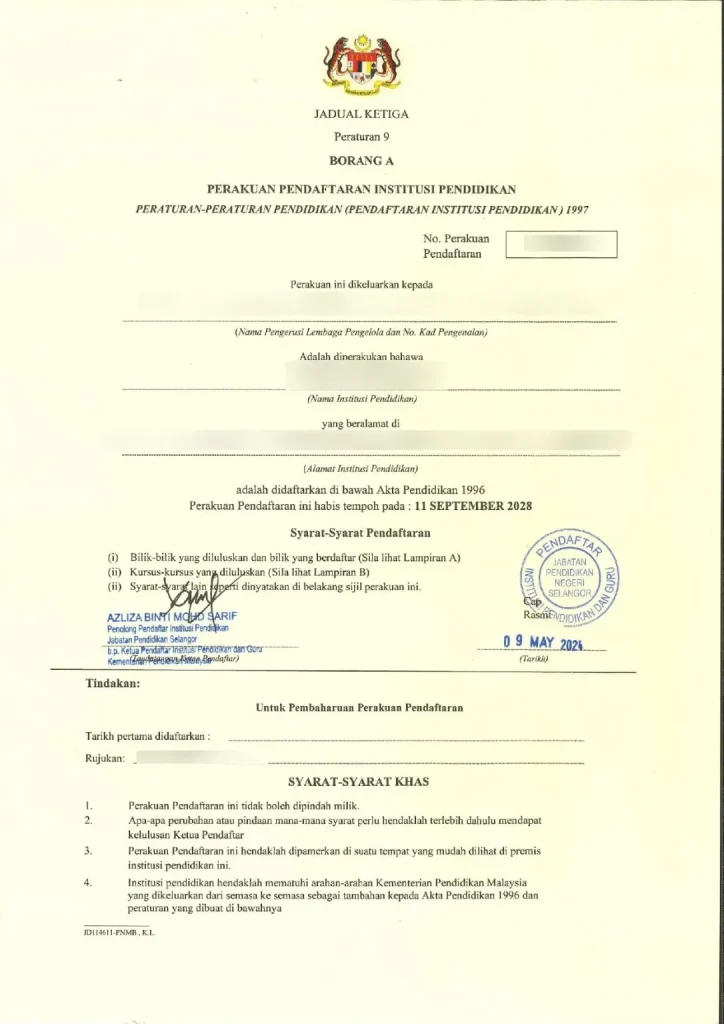
PEI license for a tuition centre.
These are licenses that allow a business to operate in a specific sector, and common examples include:
- MOTAC licenses for tour and travel agencies
- Private Education Institution registration for education centres, and
- JTK licenses for employment agencies
They are issued by federal government agencies or statutory bodies, and often come with specific requirements for paid-up capital, technical expertise, staffing, or locations.
Activity-specific

Sample WRT license.
These are licenses that apply across sectors for businesses operating within certain parameters or conducting certain activities such as:
- Wholesale, Retail & Trade (WRT) or Unregulated Services Sector (USS) licenses for foreign-owned businesses
- liquor licenses for businesses serving / selling alcohol
- MOF licenses for transacting with government agencies
Local Authority (PBT)
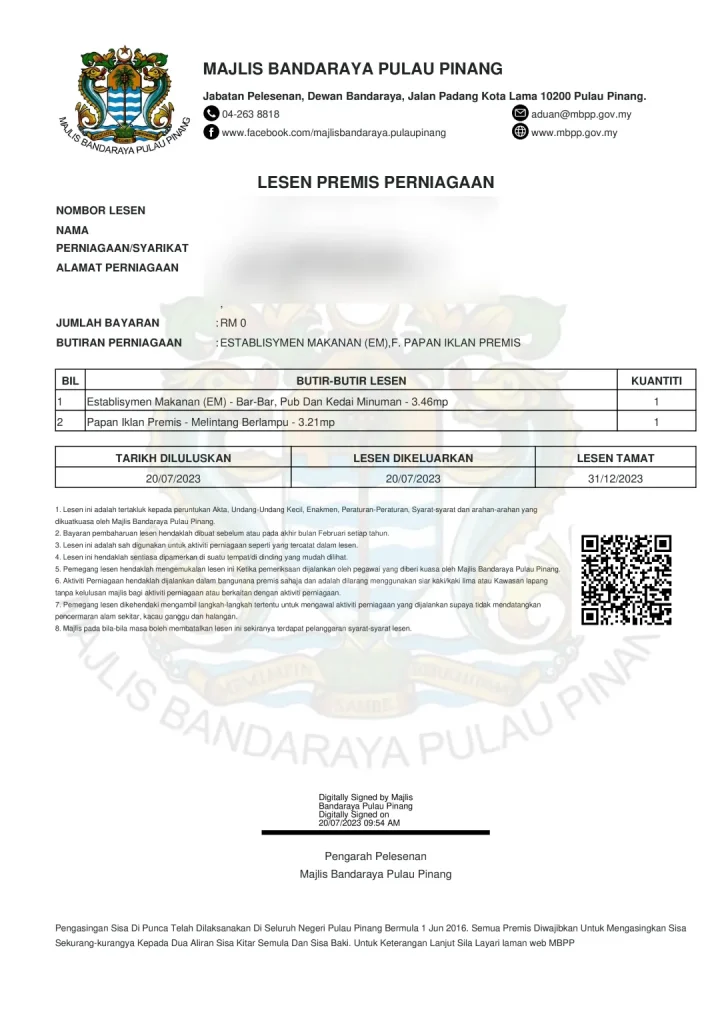
PBT license for a business in Penang.
Local Authorities (called PBTs) are district level governments that regulate licensing for business premises, and foreigners can think of them as the ‘last mile’ of trade licenses that include:
- premise & signboard licenses (often combined under a composite license)
- entertainment licenses
- car park reservations
Foreign investors and businesses can think of these as the last mile of business licenses – once you get all your industry and activity licenses, you need to get the PBT’s approval to operate from a physical premise in their jurisdiction.
When is a company considered foreign owned?
A Malaysian company can have foreign shareholders, but requirements increase alongside foreign equity percentage, and generally speaking, there are three important thresholds:
| Foreign Equity | Main Impact |
|---|---|
| Below 20% | SME tax benefits may remain available |
| 30% and above | Higher paid-up capital requirements for Employment Pass applications |
| Above 50% | Company becomes foreign-owned for many regulatory purposes |
For licensing, the most important threshold is usually past 50%.
What happens when foreign ownership exceeds 50%?
Once foreign shareholders collectively own more than 50% of a Malaysian company, the company is considered foreign-owned, and will often need either:
- a Wholesale, Retail & Trade (WRT) license if it operates in trade sectors (yes, the one we shared above), or
- an Unregulated Services Sector (USS) license if it operates in service sectors
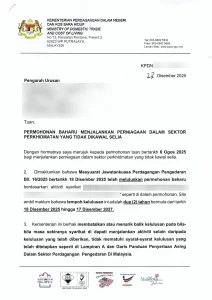
Sample USS license.
These licenses are administered by the Ministry of Domestic Trade and regulate foreign participation in Malaysia’s economy, and both require:
- a minimum paid-up capital of RM1 million
- supporting business documentation
- justification of business activities
- compliance with applicable sector requirements
As a result, the jump from 50% foreign ownership to 51% foreign ownership can have a significant impact on licensing obligations.
Example: A restaurant JV between a Malaysian & foreigner
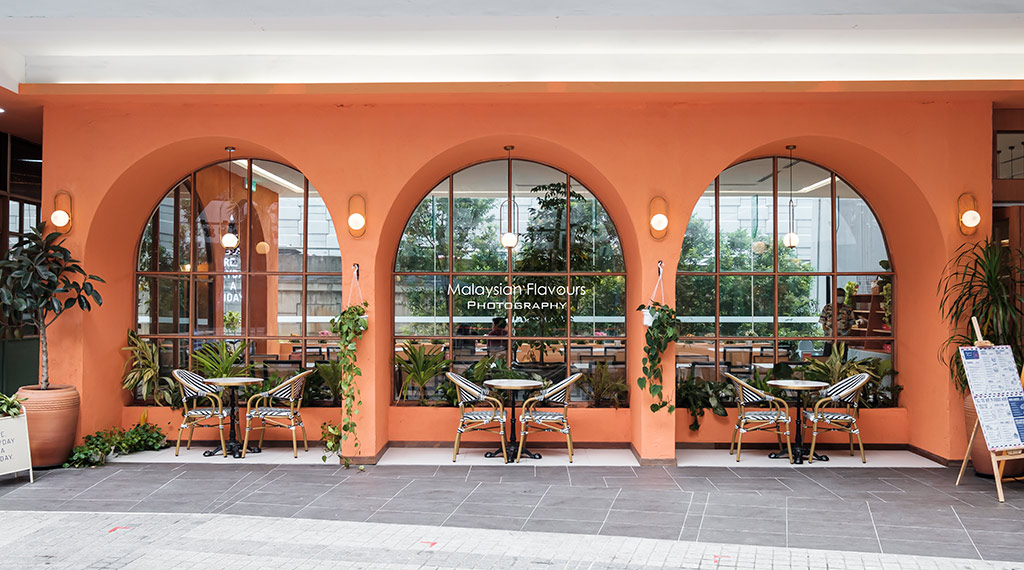
Let’s say a Malaysian and foreigner co-own a restaurant through a locally incorporated company with a 50-50 split.
In this scenario, the business would just need to obtain the same trade licenses as any other locally owned restaurant.
Now imagine the foreigner acquires an additional 1% raising the foreign equity to 51%.
The restaurant is now foreign-owned and will need to obtain the relevant foreign participation license – in this case a WRT license – which means it better have RM1 million in paid-up capital!
Takeaways for readers
A lot of trade license requirements for foreign-owned companies work like the example above: On top of the usual licenses a local company needs, the foreign-owned company will also need either a WRT or USS license.
And of course, the foreign equity must adhere to any maximum limits for a particular industry.
For example, F&B businesses can be 100% foreign owned, but education businesses generally require at least 30% local ownership – if this is not met, then the industry license will either not be issued if it is a new application or revoked once it must be renewed.
That’s it from us, and we wish you all the best with your Malaysian venture 🥰
Let MISHU handle your WRT license application 
If you are a foreigner looking to set up a business in Malaysia, consider our professional WRT license application services for a one-stop solution for company incorporation, visa applications, and full trade licensing support.