
Yes, Local Companies In Malaysia Can Have Foreign Shareholders!
Having helped dozens of businesses from across the world set up ventures in Malaysia with varying degrees of foreign ownership, the MISHU team can confidently say that yes, local companies in Malaysia can have foreign shareholders.

The more the merrier.
Unsurprisingly, as its level of foreign shareholding increases, so do the requirements for that company to do business.
For foreigners looking to invest in a Malaysian expansion, our guide explains what a local company with foreign shareholding is (versus an actual foreign entity) as well as what happens when foreign equity:
- stays below 20%
- reaches 30%, and
- exceeds 50%
Let’s begin.
Note: This guide exclusively touches on private companies as that’s the demographic we serve. For public company incorporation, see SSM’s official guide here.
Defining ‘local company with foreign shareholding’
Under Malaysia’s Companies Act 2016, a local company is a corporate entity incorporated in Malaysia known as a Sendirian Berhad (Sdn Bhd), and foreign shareholding simply means its shares are partly or wholly owned by foreigners.
In contrast, a foreign company is a local branch office of an entity incorporated outside Malaysia. Our foreign branch vs subsidiary guide compares the pros and cons of both, while this guide exclusively refers to Sdn Bhds.

Regardless of foreign equity, requirements to incorporate a Sdn Bhd remain the same:
- paid-up capital of at least RM2,500 / USD600
- a unique name not in use
- one shareholder
- one locally residing director (can be a foreigner as long as they live in Malaysia)
- registered Malaysian address
Although the legal minimum to incorporate is RM1, our experience has been that banks are only comfortable to open corporate accounts when they see at least RM2,500 in paid-up capital, so we advise this as the effective minimum.
As we’ll see below other requirements to do business as a foreign venture increases required investment significantly.
If foreign equity stays below 20%
The biggest impact here is on corporate tax rates.
If partners in a joint venture agree to keep foreign shareholding to >20% and the business qualifies as an SME (paid-up capital not exceeding RM2.5 million and annual revenue under RM50 million), it enjoys the same progressive tax rate as a 100% local owned company.
As of 2025, the SME tax rate is:
- 15% on the first RM150,000
- 17% on RM150,001 to RM600,000, and
- 24% on anything above RM600,000
Once foreign equity goes above 20%, regardless of paid-up capital and revenue, it is taxed a flat rate of 24%.
If foreign equity reaches 30%
The biggest impact here is on minimum paid-up capital requirement for a company to apply for Employment Passes (EPs).
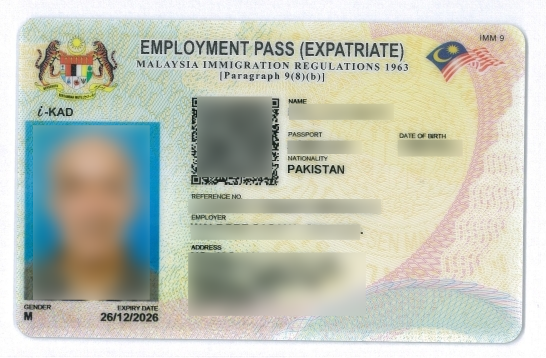
Also known as a DP11 visa.
While foreign ownership stays >30%, the minimum paid-up capital required is RM250,000, but once it reaches 30% and above the minimum paid-up capital jumps to RM350,000.
Note: While we’re on the topic, Malaysian EPs are offered under three categories and recent revisions come with significant minimum salary requirements across the board:
- Category 1 EP: RM20,000 / month
- Category 2 EP: RM10,000 / month
- Category 3 EP: RM5,000 / month
As these are non-negotiable for businesses planning to employ expatriates as directors and key team members in their Malaysian operations, we felt it’s something we should mention.
If foreign equity exceeds 50%
This means the Sdn Bhd doesn’t just have foreign shareholders, but is foreign-owned, and will almost certainly either need a Wholesale, Retail & Trade (WRT) or Unregulated Services Sector (USS) license.

Sample WRT license.
These licenses regulate foreign involvement in Malaysia’s trade (WRT) and service (USS) sectors and acknowledge that a foreign business is of a certain size, won’t threaten smaller local players, and ideally adds unique value to the Malaysian market.
As a result, both WRT and USS licenses require proof of at least RM1 million or about a quarter million USD in paid-up capital, and potentially more depending on the sector and number of outlets.
And in case readers are wondering, yes, these licenses are required even for foreign branch offices!
That’s all from us, and we hope this helps you better plan your company structure 🥰
Let MISHU handle your WRT license application 
If you are a foreigner looking to set up a business in Malaysia, consider our professional WRT license application services for a one-stop solution for company incorporation, visa applications, and full licensing support.