
Yes, Foreigners Can Open Companies In Malaysia (But It’s Harder)
Having helped dozens of foreign businesses and entrepreneurs establish ventures across Malaysia, the MISHU team can happily confirm that yes, foreigners can legally open companies in Malaysia.

Overpriced goods especially welcome!
However, to protect local small businesses, foreigners are subject to additional requirements that require a significant amount of capital, only allowing ventures of a certain size and maturity to do business in Malaysia.
For those interested, our guide provides an overview of these requirements, including:
- foreign business entity options
- licensing requirements
- expatriate work visas, and
- potential workarounds to reduce compliance demands on a foreign business
Let’s begin.
Note: This guide exclusively touches on private companies as that is the demographic MISHU serves. For public company incorporation, see SSM’s official guide here.
Foreign business entity options
As Malaysia generally only wants larger overseas ventures, foreigners generally cannot register Sole Proprietorships unless they are a permanent resident with a red identity card that looks like this:
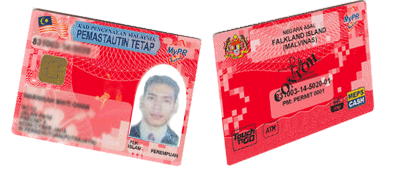
Most foreigners have the two main business entity options when forming a company:
- foreign branch office, or
- foreign-owned Sendirian Berhad (Sdn Bhd)
A branch office is a local extension of a foreign parent incorporated outside Malaysia while a Sendirian Berhad is a private limited company incorporated in Malaysia whose shares are owned by foreign individuals or businesses (in which case it’s a subsidiary).
For overseas businesses expanding into Malaysia, the choice depends on the desired level of control and we cover this in full in our foreign branch vs subsidiary guide.
If you’re setting up a completely new business, a Sdn Bhd is the way to go, basic company incorporation requirements are as follows:
- paid-up capital of at least RM2,500 / USD600
- a unique name not in use
- one shareholder
- one locally residing director (more on this shortly)
- registered Malaysian address
While requirements to incorporate are quite modest, as we’ll see below other requirements to do business as a foreign venture pushes up the required investment significantly.
Licensing requirements
In addition to Local Council business premise and signboard permits and licenses from federal regulatory bodies required of any business, almost all companies with >50% foreign ownership (certainly foreign branch offices) will also either need a Wholesale, Retail & Trade (WRT) or Unregulated Services Sector (USS) license.

Sample WRT license.
These licenses regulate foreign involvement in Malaysia’s trade (WRT) and service (USS) sectors and acknowledge that a foreign business is of a certain size, won’t threaten smaller local players, and ideally adds unique value to the Malaysian market.
As a result, both WRT and USS licenses require proof of at least RM1 million or about a quarter million USD in paid-up capital, and potentially more depending on the sector and number of outlets.
Expatriate work visa requirements
Remember how incorporating requires a locally residing director? This person doesn’t have to be Malaysian, just to reside in the country.
In most cases, the owner or a key person in the company moves to Malaysia to be employed in the business as a foreign director, which requires the company to apply for a Category 1 Employment Pass.
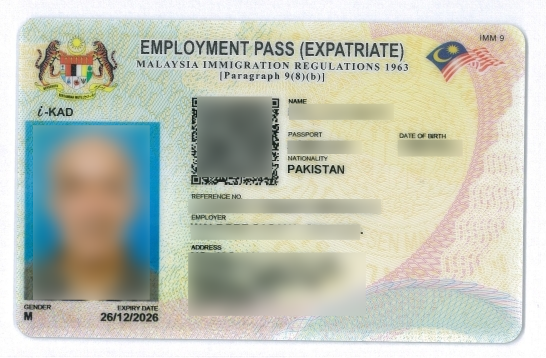
Also known as a DP11 visa.
This visa is specifically for companies to employ expatriates in key leadership roles, and come June 2026, revisions to eligibility requirements include a minimum monthly salary of RM20,000 or about USD5,000.
Renewals require submitting payslips and tax returns, so there’s no way around this if you’re in it for the long haul 🙂
Also, the company must first register for an ESD account which is Immigration’s portal for expat workvisa applications.
Potential workarounds to reduce compliance
Two proven alternative steps some of our foreign clients take to reduce financial burdens are:
- Incorporated joint ventures with local parties, and
- Nominee director arrangements
Naturally, any financial benefits are paid for via tradeoffs in other areas.
Incorporated joint ventures with locals
By forming a company with local partners who own at least 51% of the equity, the WRT / USS license requirement is removed as well as the corresponding RM1 million paid up capital. Additionally, if the foreign party is willing to further reduce their stake, the joint venture can enjoy better tax treatment and lower paid-up capital requirements to apply for Employment Passes.
The tradeoff is obvious: The foreign party cannot have a majority stake in their business.
Nominee director arrangements
This is where someone living in Malaysia is appointed as named director on paper to meet incorporation requirements. They and the foreign business typically enter into a nominee director agreement so that they have no control over company financials or decision-making.
In return, the nominee typically has the ability to vacate their position as director whenever they want, in which case the business must scramble to find a replacement or risk getting dissolved.
Let MISHU handle your WRT license application 
If you are a foreigner looking to set up a business in Malaysia, consider our professional WRT license application services for a one-stop solution for company incorporation, visa applications, and full licensing support.