Yes, Foreigners Can Open Restaurants In Malaysia (But It’s Harder)
Having helped dozens of foreign owned companies (>50% foreign shareholding) set up F&B outlets in locations ranging from Kuala Lumpur to Johor, the MISHU team can happily confirm that yes, foreigners can legally open restaurants in Malaysia.
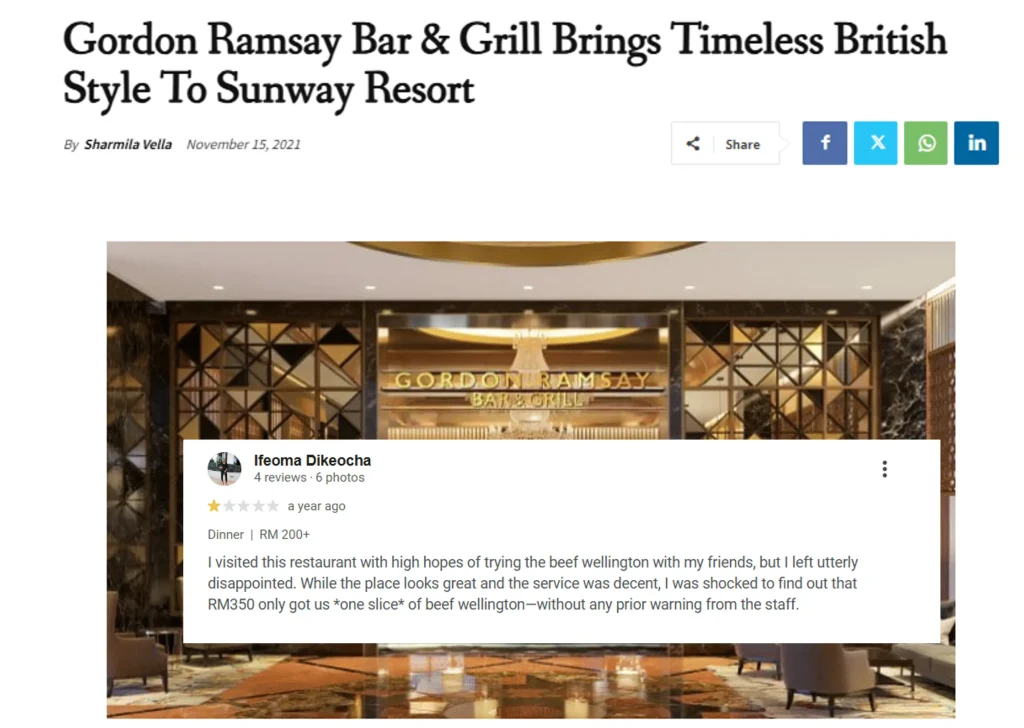
And they don’t even have to be good!
However, in addition to the same licenses locally owned restaurants must obtain, foreign restaurants must also secure a Wholesale, Retail & Trade (WRT) license which carries significantly higher requirements than most are prepared for.
For those interested, our guide provides an overview how to set up a restaurant in Malaysia as a foreigner, including:
- eligibility as a foreigner
- business entity registration
- mandatory licenses and their requirements
- a potential workaround, and
- optional licenses depending on type of restaurant
Let’s begin.
Eligibility as a foreigner
Basically, not all visas that allow a foreigner to reside in Malaysia also allow them to carry out business activities, and common visas that permit principal holders to become company directors in Malaysia include:
- Category 1 Employment Passes (tied to the planned restaurant)
- Residence Pass Talent visas
- MM2H Platinum Passes, and
- Spouse visas (with additional approval of approval to work)
Meanwhile, these visas prohibit holders from carrying out business activities in Malaysia:
- Dependent / long-term social visit passes
- Professional visit passes
While these are not exhaustive lists, in our experience they cover 99% of foreigners who want to set up a restaurant, and the 1% outliers are welcome to get in touch to ask us whether your visa entitles you to running a business here!
Assuming you qualify, the next step is to register a Malaysian business entity.
Business entity registration
As a foreigner setting up an SME in Malaysia, you have two choices of business entities:
-
Limited Liability Partnerships (LLP)
-
Sendirian Berhads (Sdn Bhd)
Our Sdn Bhd vs LLP guide does a full comparison of the two, but for your convenience, here are key takeaways:
- both grant owners liability from debt borne by the business entity
- both are subject to similar tax rates (but Sdn Bhds enjoy more tax incentives)
- it’s significantly easier for Sdn Bhds to grow and scale due to perceived trustworthiness and ability to issue shares
- it’s more expensive to form and maintain a Sdn Bhd
- Sdn Bhds are subject to stricter record keeping and compliance requirements
As Sdn Bhds are the more popular choice and our general recommendation, for the purposes of this guide, we will proceed assuming that is your entity of choice. Of course, you should give the matter serious consideration as the choice has significant impact on maintenance costs and future potential!
Sdn Bhd incorporation requirements
There are five main requirements to register a company in Malaysia:
- paid-up capital of at least RM2,500 / USD600
- a unique name not in use
- one shareholder
- one locally residing director
- registered Malaysian address
Upon incorporation, you will also need to appoint a licensed Company Secretary within 30 days to act as your compliance officer, and if you are physically in Malaysia, you can technically register your own company, and for a full breakdown, see our guide to 100% foreign-owned companies in Malaysia.
If you’re outside Malaysia, you’re pretty much left with engaging third-party service providers, which we happen to be!
Once you have registered your Sdn Bhd and registered with the various statutory bodies, it’s time to look into licensing for your restaurant.
Mandatory business licenses for a foreign restaurant
At the very least, you will need to obtain two licenses.
PBT license
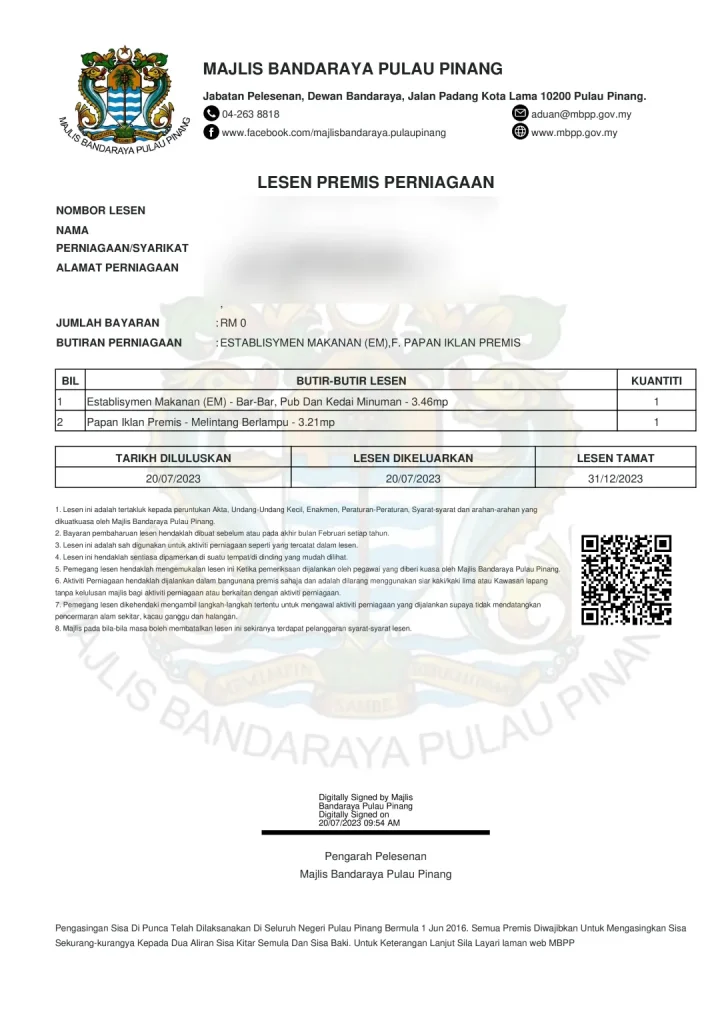
A PBT license is technically two licenses (signboard and premise) provided under a single application known as a composite license by Local Authorities (known as Pihak Berkuasa Tempatan) that govern the local area where your restaurant premise will be located. A composite license acknowledges your business meets premise and advertising standards for safety and honest representation.
Specific requirements vary between districts, but across the board, all composite license applications for F&B outlets require:
- have your business registration documents (that’s why you incorporate a Sdn Bhd first)
- secure suitable premises and sign a tenancy agreement
- undergo a certified food handling course
- receive typhoid injections for yourself and staff
- secure Ministry of Health certificates
- design a signboard that complies with Local Council guidelines
- pass a premise inspection by PBT officers
Your best bet is to pass a premise inspection to speak to a business consultant, call the Local Authority in question, or track down a checklist from an official online source.
From the date of application, expect 2 to 4 weeks for your composite license to be granted, upon which it is valid for one year and renewable for another 12 months subject to passing a follow-up inspection.
Wholesale, Retail, & Trade (WRT) license

This license is issued by the Malaysian Ministry of Domestic Trade (KPDN) as is required by any foreign-owned business operating in a trade sector, including restaurants.
One of the main purposes of this license is to protect Malaysian small businesses, as you will see by some of the primary requirements to apply though a WRT 1 form as a foreign-owned restaurant:
- minimum paid-up capital of RM1 million
- a shop lot of at least 1,000 – 1,500 square feet
- fully or partially air-conditioned
- a unique and specialised menu
- ambience and decoration aligned with the restaurant’s menu
- suitable restaurant location
While strict, these requirements are designed to ensure foreign F&B outlets that operate here will not end up directly competing with locally owned small outlets.
This license takes around 2 – 4 months to be approved, depending on the current backlog of applications, and though KPDN doesn’t impose their own application fee for a WRT license, it’s rare to apply for your own, and so be prepared to pay a third-party to help you navigate the application and eventual renewal process.
Joint-venture to avoid WRT license
If you don’t have RM1,000,000 to inject as paid up capital, one potential workaround is to find a Malaysian partner and incorporate a company as a joint-venture in which they own 51% of the shares, thereby making the business locally owned and a WRT license unnecessary.
This comes with significant risks, and we’d strongly recommend engaging a lawyer to draft a watertight Shareholders’ Agreement.
Furthermore, if you were planning on moving to Malaysia to run the restaurant with an Employment Pass, you’ll still need to inject at least RM250,000 as paid up capital as that is the minimum requirement to qualify for an EP application!
Additional licenses
These licenses are not mandatory by default and depends on the type of restaurant you want to operate.
Alcohol licenses
If you intend to serve alcohol for on-premises consumption or for customers to bring home, you’ll need to apply for a liquor license from your Local Authorities. This requires passing a police interview and ensuring your premises are a certain distance from schools and majority Muslim residential areas.
Halal Certificate
If your main target audience are Muslims, getting your restaurant Halal certified could be worth exploring, though bear in mind Malaysia is among the strictest countries when it comes to Halal regulations.
Music licenses
If you plan to play copyrighted music in your premises in any way, you will need to apply for the right music licenses from at least one of Malaysia’s three music license regulatory bodies that each collect royalties for separate parties.
Let MISHU handle your WRT license application
If you are a foreigner looking to set up a restaurant in Malaysia, consider our professional WRT license application services for a one-stop solution for company incorporation, visa applications, and full licensing support.