
No, Foreigners Can’t Register Sole Proprietorships In Malaysia (But Here’s What They Can)
As the title of this article says, Sole Proprietorships, also known as Enterprises, cannot be registered or owned by foreigners in Malaysia. The sole exception is for foreign permanent residents, and if you are one, your identification card will look like this:
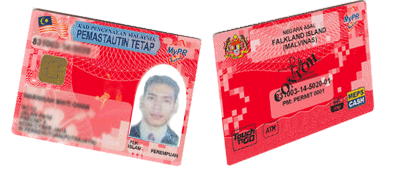
This visa must be specifically applied for, so PR status is never automatically assigned to a foreigner no matter how long they have lived in Malaysia for and holders of spouse visas, Employment Passes, and student visas are not considered permanent residents.
That said, we felt like just saying ‘no’ and leaving it at that was rather unhelpful.
Foreigners are allowed to register other types of business entities in Malaysia, and for those prepared to meet the requirements, below we compare Sendirian Berhads (Sdn Bhds) and Limited Liability Partnerships (LLPs), two of the most popular structures.
Here’s how we’ve broken it down:
- a quick overview of both structures
- main similarities and differences
- when to choose one over the other, and
- requirements for foreigners to do business in Malaysia
Let’s begin.
Overview

Both Sdn Bhds and LLPs are business entities regulated by the Companies Commission of Malaysia (SSM) are treated as separate legal entities that can be 100% foreign-owned, with slight differences that make them more and less suitable for different types of foreign ventures.
Sendirian Berhad
A Sendirian Berhad (Sdn Bhd) is Malaysia’s version of a private limited liability company and the primary structure for larger ventures such as foreign subsidiaries, joint ventures between locals and foreigners, or any business that plans to grow by raising funds from investors.

On the other hand, a Sdn Bhd can be owned by a sole shareholder, so besides being used for large businesses, it is also a go-to structure for entrepreneurs who want full control over decisions.
Advantages
- the well-defined structure and transparency of Sdn Bhds appeals more to investors and banks
- due to these advantages a Sdn Bhd is the most conducive structure for long-term growth and scalability
Disadvantages
- stricter reporting and audit requirements
- higher start up and operational costs that other structures due to more professional service charges
- company performance and financial details are publicly accessible
Ultimately, these drawbacks are simply the cost of a business structure that balances growth and protecting owner assets.
Limited Liability Partnership
An LLP is a mix between a Sdn Bhd with a Conventional Partnership (a Sole Proprietorship with two partners) and is mostly used by professional service providers like law and accounting firms who want the protection of limited liability but are not allowed to operate as a Sdn Bhd in Malaysia.

Effectively, it is very similar to a Sdn Bhd, but the biggest differences are:
- it cannot sell shares which makes growing through investment more complicated (though not impossible), and
- it requires at least two partners which means one party having full control is not possible
Advantages
- no upper limit on number of partners
- profits and losses pass through to the individual partners’ personal tax returns
Disadvantages
- raising capital is more challenging for LLPs compared to Sdn Bhds as they cannot issue shares
- if partners have a major disagreement the business will absolutely be affected, and we have seen this happen numerous times
Side-by-side comparison
| Criteria | LLP | Sdn Bhd |
|---|---|---|
| Formation costs | ~ RM1,500; a specially tailored LLP agreement may increase costs | ~ RM4,000 for a typical incorporation |
| Annual maintenance | Lower | Higher |
| Liability protection | Limited to paid-up capital of LLP
Partners are partially protected but can be personally liable for individual actions. |
Limited to share capital
Shareholders are liable to the extent of their shareholding, while directors are protected but can be personally liable for individual actions. |
| Administration structure | Simpler | More complicated |
| Tax on business |
|
|
| Tax on owners |
|
|
| Ease of growth | Harder to secure loans or grants and cannot raise funds through share sales | Easier to obtain loans or grants and can raise funds by issuing shares to investors |
Here are the most important takeaways from the table:
- Both offer limited liability protection and are given corporate tax treatment
- Sdn Bhds cost more to form and maintain and have stricter compliance requirements
- LLPs don’t have the growth potential of a Sdn Bhd due to inability to issue shares
- Sdn Bhds can be owned by a single foreigner while LLPs require at least two partners
You probably already see why we recommend Sdn Bhds, but just to be sure, let’s make it clear.
Why MISHU recommends Sdn Bhds for foreigners
For most foreigners setting up a business in Malaysia, we believe a Sdn Bhd is the superior choice due to the better growth potential, which is what most entrepreneurs and business owners ultimately want.
Yes, incorporation and maintenance costs are higher and regulatory requirements are stricter, but the thousands of new Sdn Bhds incorporated every month show that it isn’t unmanageable and is a worthwhile trade-off for the ability to raise capital, access unique grants, and secure business loans.
When an LLP is a better choice
For foreigners setting up professional firms that cannot operate as a Sdn Bhd, and LLP is the only choice!
Outside of that, other use cases for LLPs include:
- investment holding structures, or
- small, lifestyle businesses that do not intend to scale significantly
If you are confident that you won’t need external funding, bank financing, or investor participation, an LLP can be a simpler and more cost-effective option.
Requirements for foreigners
Whether as a Sdn Bhd or LLP, foreigners must be prepared to navigate three additional requirements to do business in Malaysia.
Certain sectors restrict foreign participation
While to our knowledge no industry in Malaysia outright prohibits foreign participation, many do not allow foreign-ownership.
On a district level, Local Councils have full discretion to restrict foreigners from any business activity as they see fit, and this is usually done to protect smaller local businesses from competition. In Kuala Lumpur for instance, it is not possible to obtain a DBKL business license to operate in 19 different sectors as a foreign-owned business.

We suppose better to ask for forgiveness rather than permission.
On a national scale, the Ministry of Education limits foreign ownership to Private Education Institution licenses to 50%, and this can be lower depending on the trade agreement between Malaysia and the foreigner’s country.
WRT / USS license requirement

Wholesale, Retail & Trade (WRT) and Unregulated Services Sector (USS) licenses are issued by the Malaysian Ministry of Domestic Trade (KPDN) as is required by any foreign-owned business operating in a trade or service sector.
One of the main purposes of this license is to protect Malaysian small businesses, which is why one of the requirements to apply though a WRT 1 form is a minimum paid-up capital of RM1 million.
Employment Pass Category 1 requirement

Very few Malaysian visas meant for long-term visits also allow holders or their dependents to operate a business on said visa.
This means there is a high likelihood that once you incorporate a Sdn Bhd or LLP, you will need to apply for a Category 1 Employment Pass (EP) through your business to hire yourself as an expatriate director or partner.
Good news: If you can meet requirements for a WRT / USS license, your business can register an ESD account and apply for an EP.
Bad news: Category 1 EPs require the role in the company to pay a monthly salary of RM10,000 (increasing to RM20,000 in June 2026) which can strain the cashflow of even the healthiest of SMEs.
And great news, if you’re interested in proceeding, we can help you every step of the way, so get in touch!
Let MISHU handle your WRT license application 
If you are a foreigner looking to set up a business in Malaysia, consider our professional WRT license application services for a one-stop solution for company incorporation, visa applications, and full licensing support.